Why Oceanlook Matters in the Age of Carbon Regulations
🌍 Why Oceanlook Is Essential in the Era of Carbon Regulation
– Oceanlook’s Practical Role Amid the IMO Regulatory Wave
The global shipping industry is facing an unstoppable tide of change.
The International Maritime Organization (IMO) has set a clear course: to achieve net-zero greenhouse gas (GHG) emissions by 2050. This goal is now taking shape through phased regulatory enforcement.
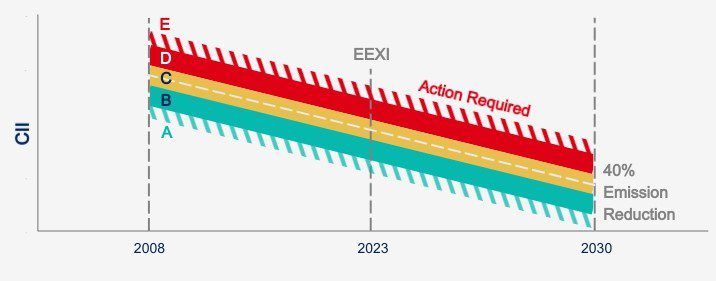
Timeline of Key Regulatory Milestones
- 2008: Baseline year for IMO’s GHG reduction targets
- 2023:
- 2030: Target to reduce GHG emissions by 40% compared to 2008 levels
Failing to respond effectively to these changes may result in fines, increased carbon costs, and even loss of competitiveness on global shipping routes.
What’s needed now is a tool that allows operators to intuitively understand and respond to these complex regulations.
That’s exactly the value Oceanlook provides.
🧭 3 Key Roles Oceanlook Plays
✅ 1. Estimating Carbon Emissions Using AIS Data
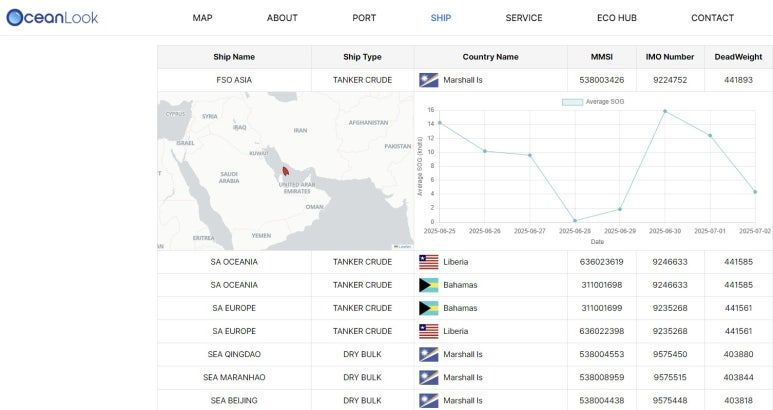
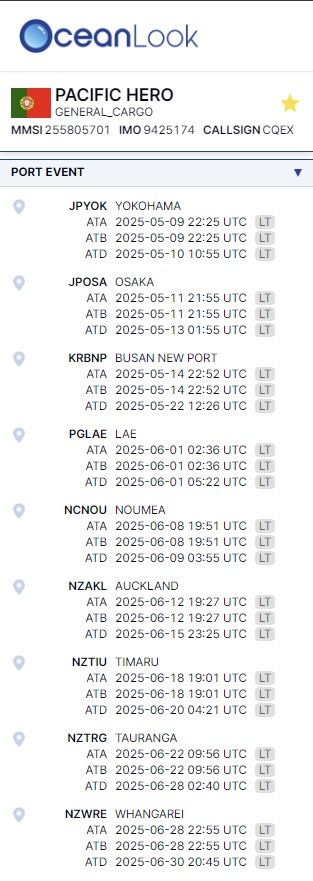
Oceanlook visualizes vessel speed (SOG), voyage distance, and operating patterns—both real-time and historical.
These are core indicators for estimating carbon emissions and can support CII calculations or fuel consumption analysis.
📌 Example:
“Vessel IMO9876543 sailed approximately 2,300 nautical miles at an average speed of 14 knots over the past 30 days → Indirect estimation of carbon emissions is possible.”
✅ 2. Visualizing Data for CII Grade Analysis
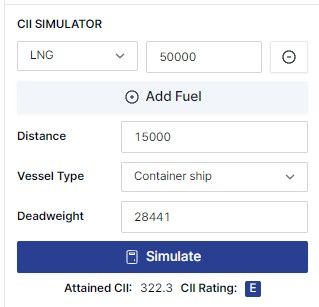
The Carbon Intensity Indicator (CII) grades ships from A to E based on transport efficiency.
By leveraging AIS data, Oceanlook enables analysis using:
- Voyage distance
- Vessel type
- Fuel consumption
- Deadweight tonnage or Gross Tonnage
This helps operators identify factors that influence CII grades and build proactive strategies—such as speed reduction or route optimization.
✅ 3. Real-Time Monitoring of ECA and Regulated Zones
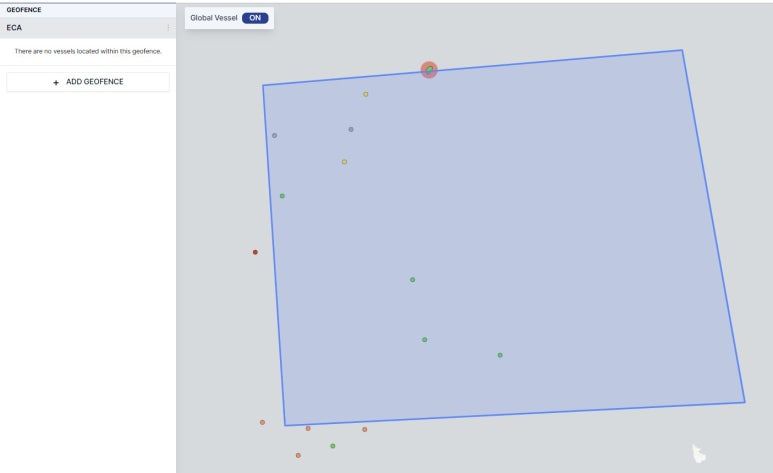
Oceanlook’s Geofence feature allows users to define specific maritime zones (e.g., SOx Emission Control Areas) and monitor vessel entry or exit in real time.
📌 Example:
“Monitor a vessel 5 nautical miles before it enters a sulfur regulation zone → Enables immediate action such as fuel switching”
This function significantly reduces operational risks related to emission regulations.
✍️ Conclusion: Regulation Requires Data, Not Guesswork

In the era ahead, the shipping industry must rely on data-driven decisions, not just intuition or experience.
From CII and DCS to GFI and carbon pricing schemes—understanding and responding to these regulations is no longer optional.
Oceanlook provides actionable insight through AIS-based visualization and zone monitoring, offering a practical path for compliance and efficiency.
Regulation is already here. Now is the time to bring Oceanlook on board.